Unearthing an Insane Past
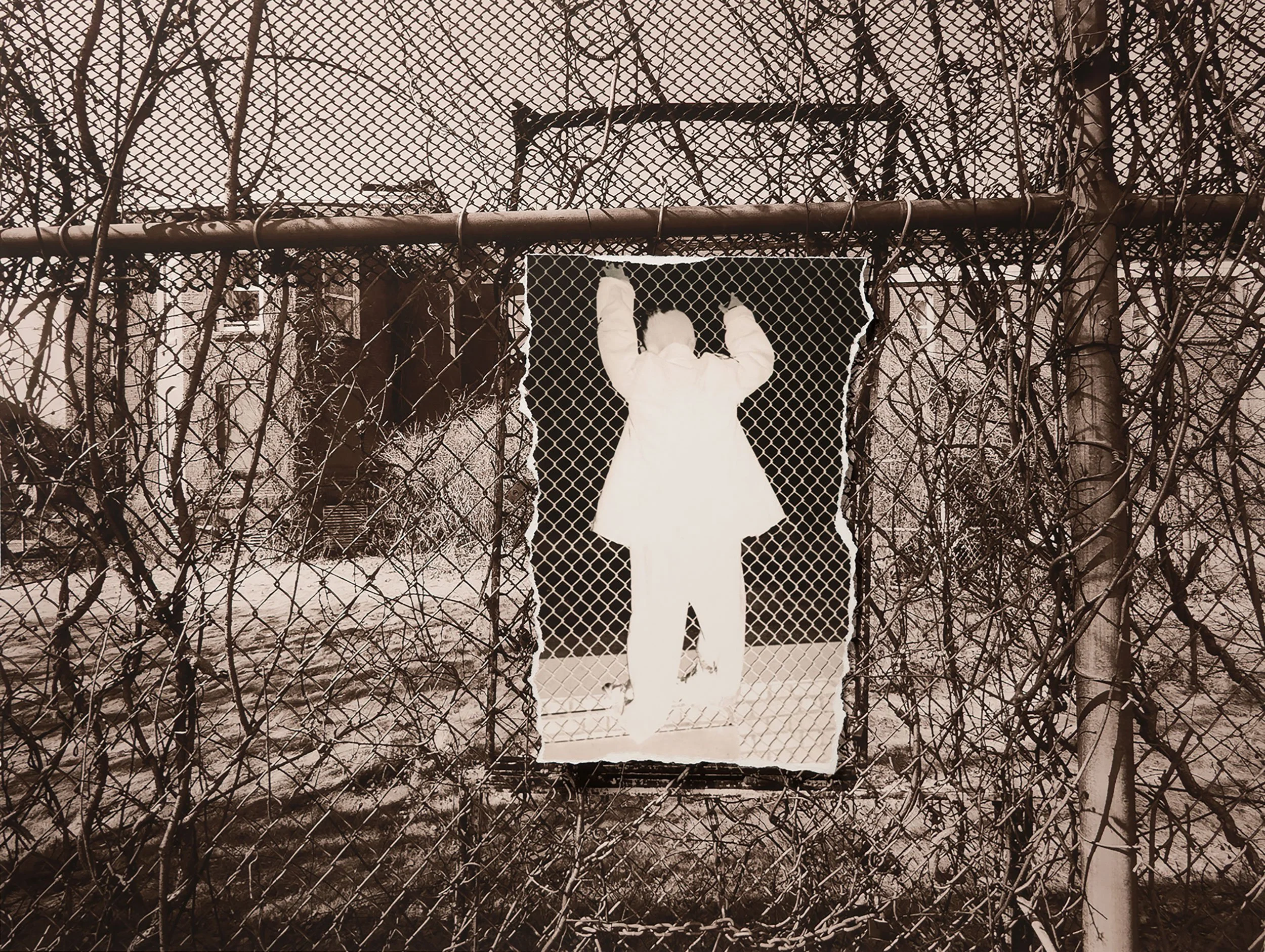
'Hanging Fence' - archival pigment prints/Dibond, 24 x 32 inches
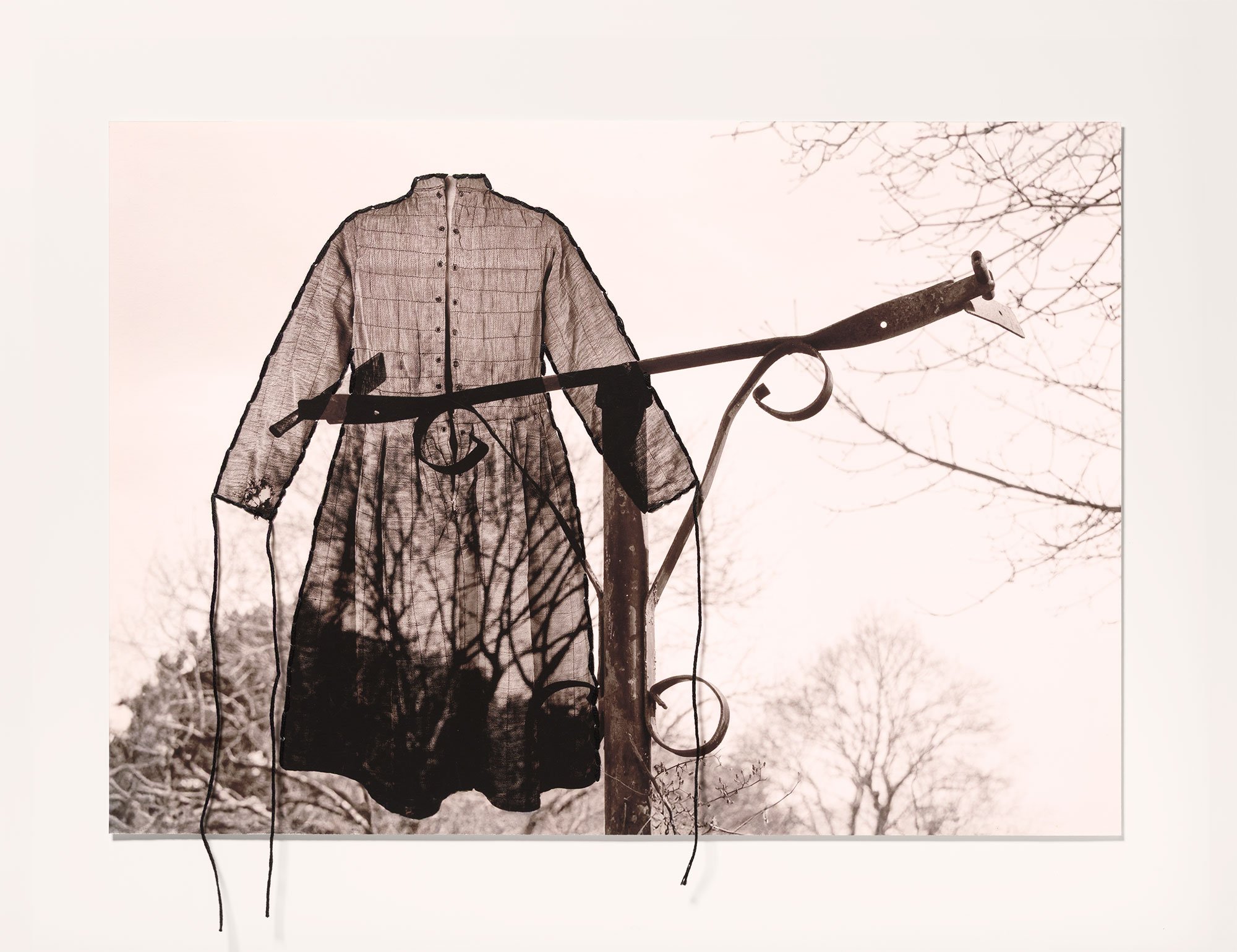
'Stiff Dress' - archival pigment print. cotton thread/Claybord, 14 x 18 inches
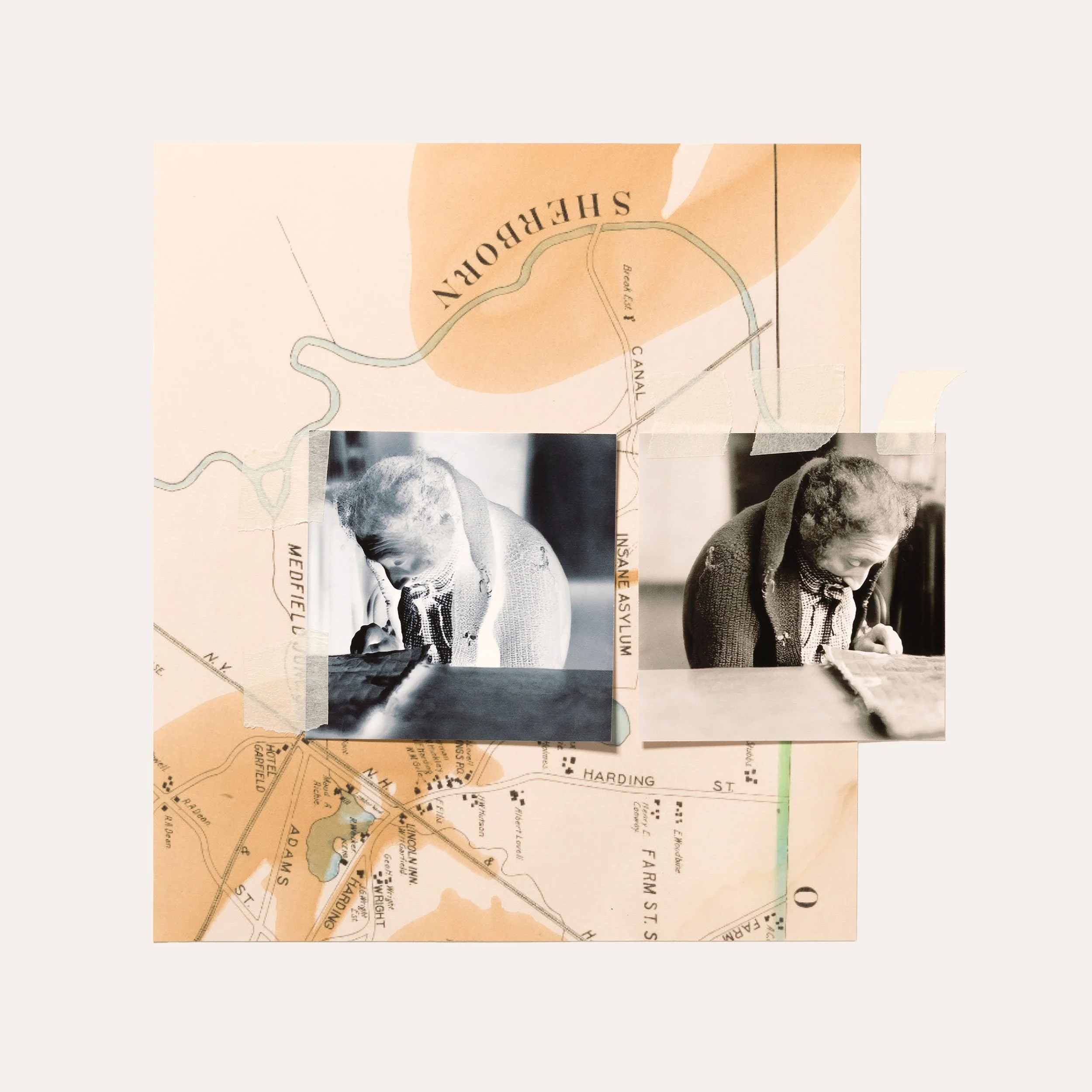
'Mapping Asylums' - archival pigment prints, adhesive tape/Claybord 12 x 12 inches
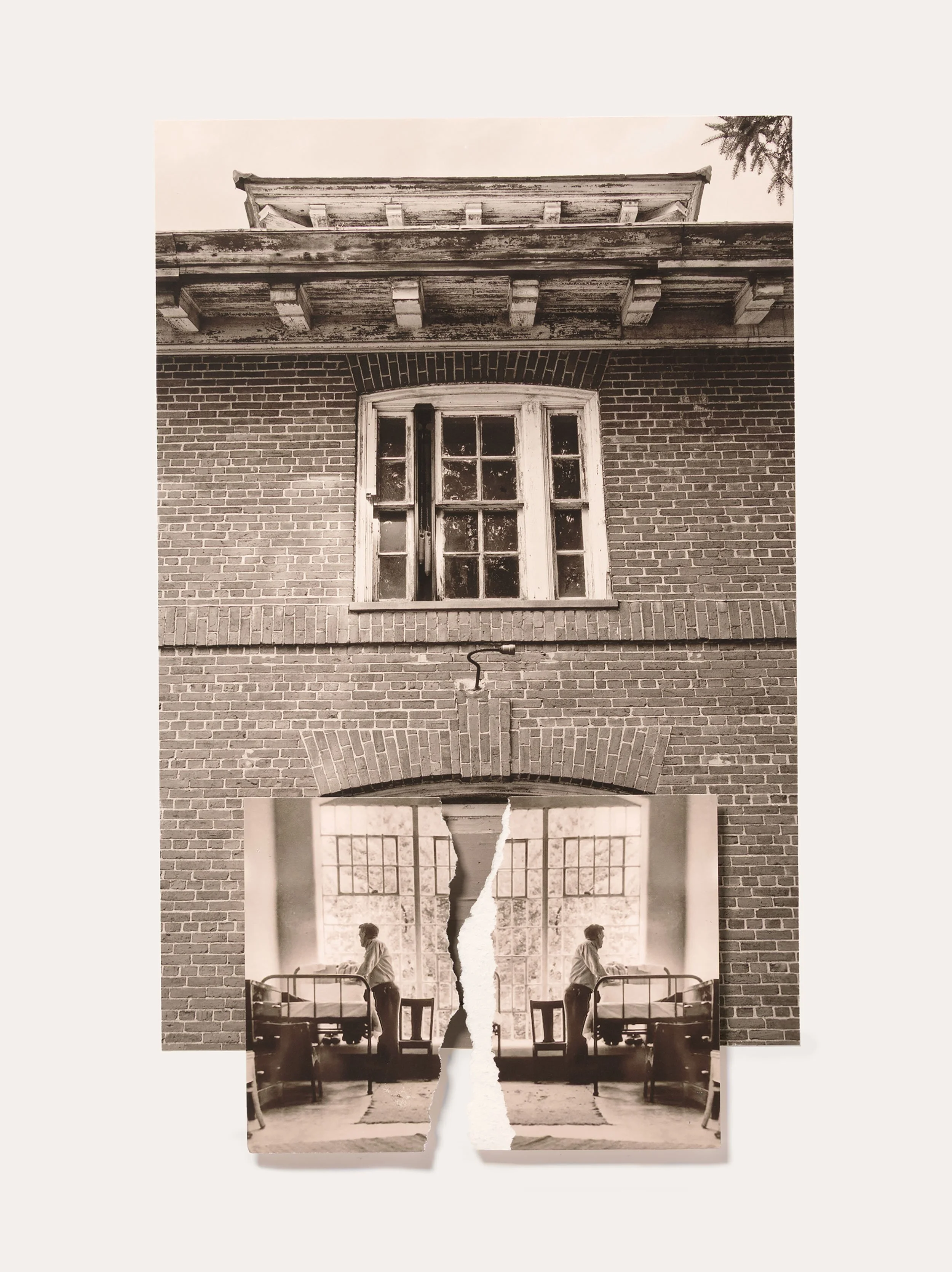
'Split Personality ' - archival pigment prints/Claybord, 16 x 12 inches
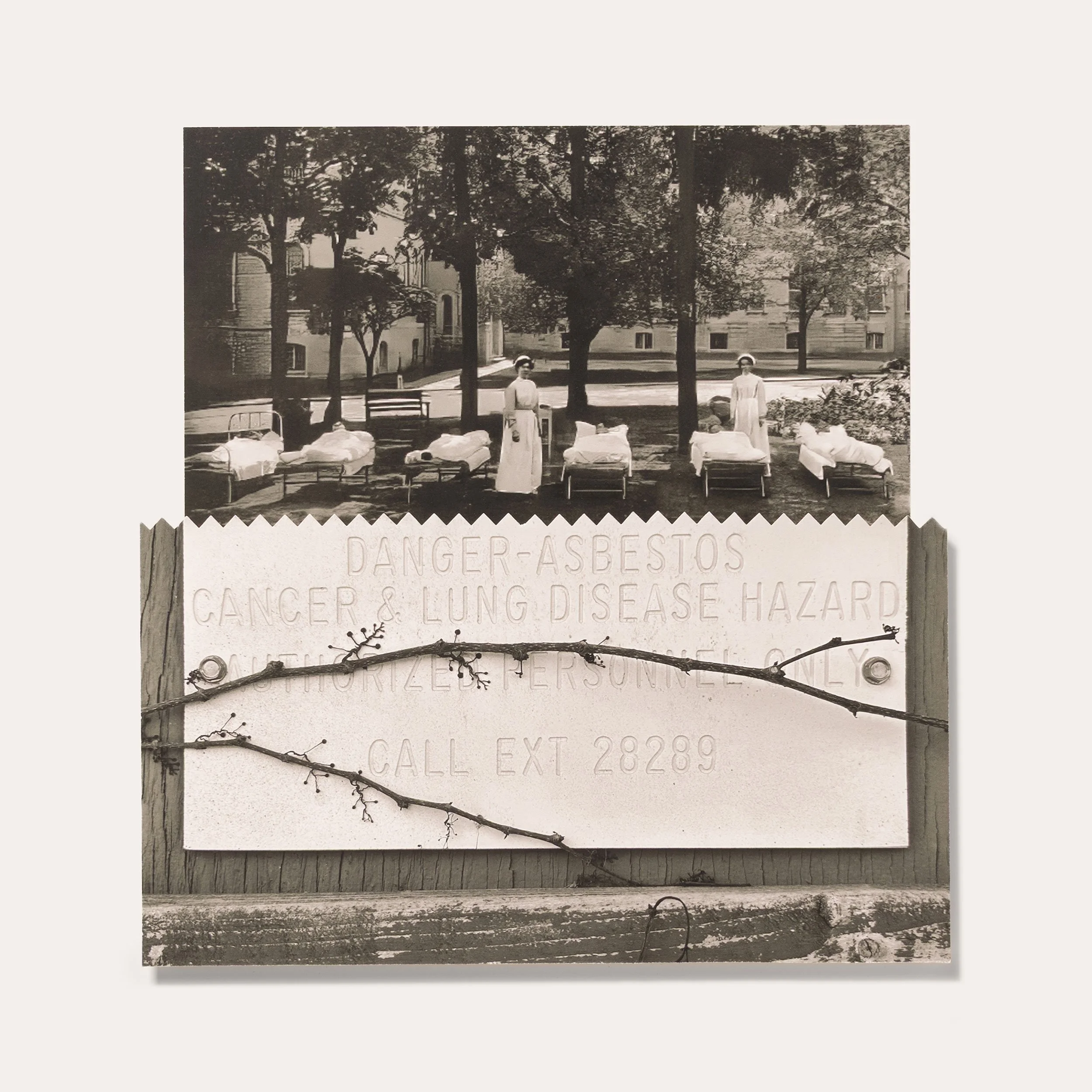
'Toxic Ward' - archival pigment prints/Claybord 12 x 12 inches
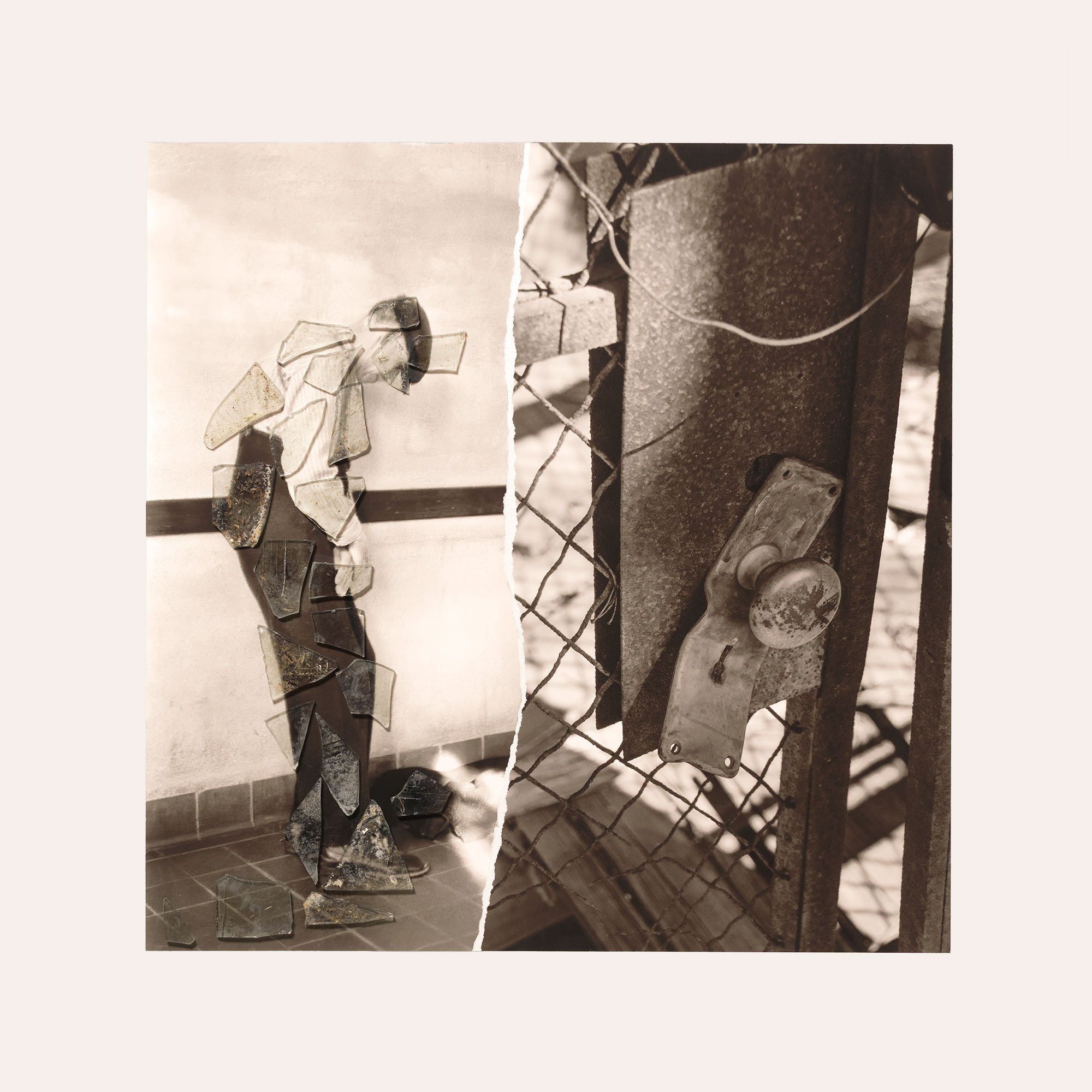
'Broken Man' - archival pigment prints/panel, 18 x 18 x 1 inches
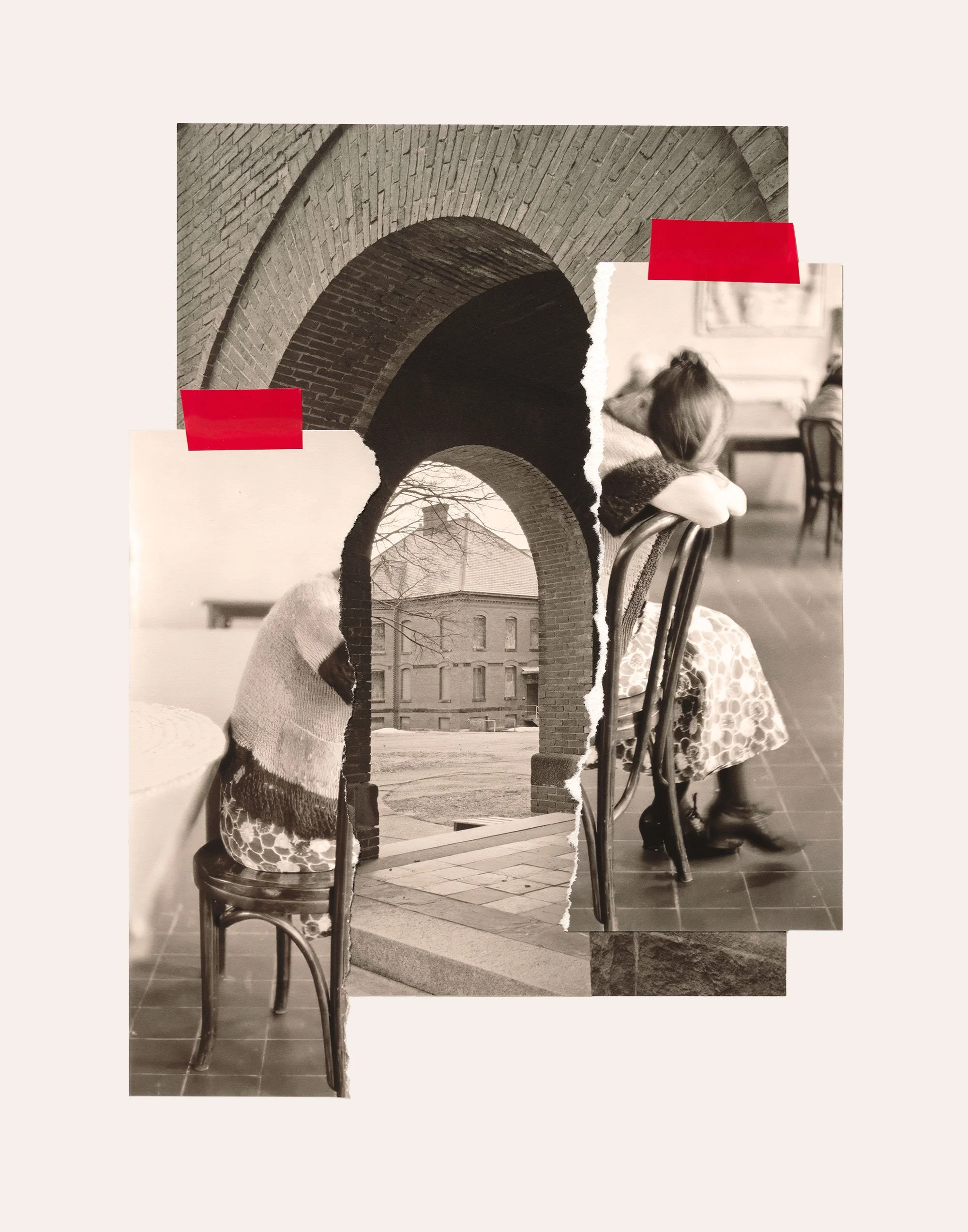
'Arching Despair' - archival pigment print, vinyl electrical tape/Claybord, 16 x 12 inches
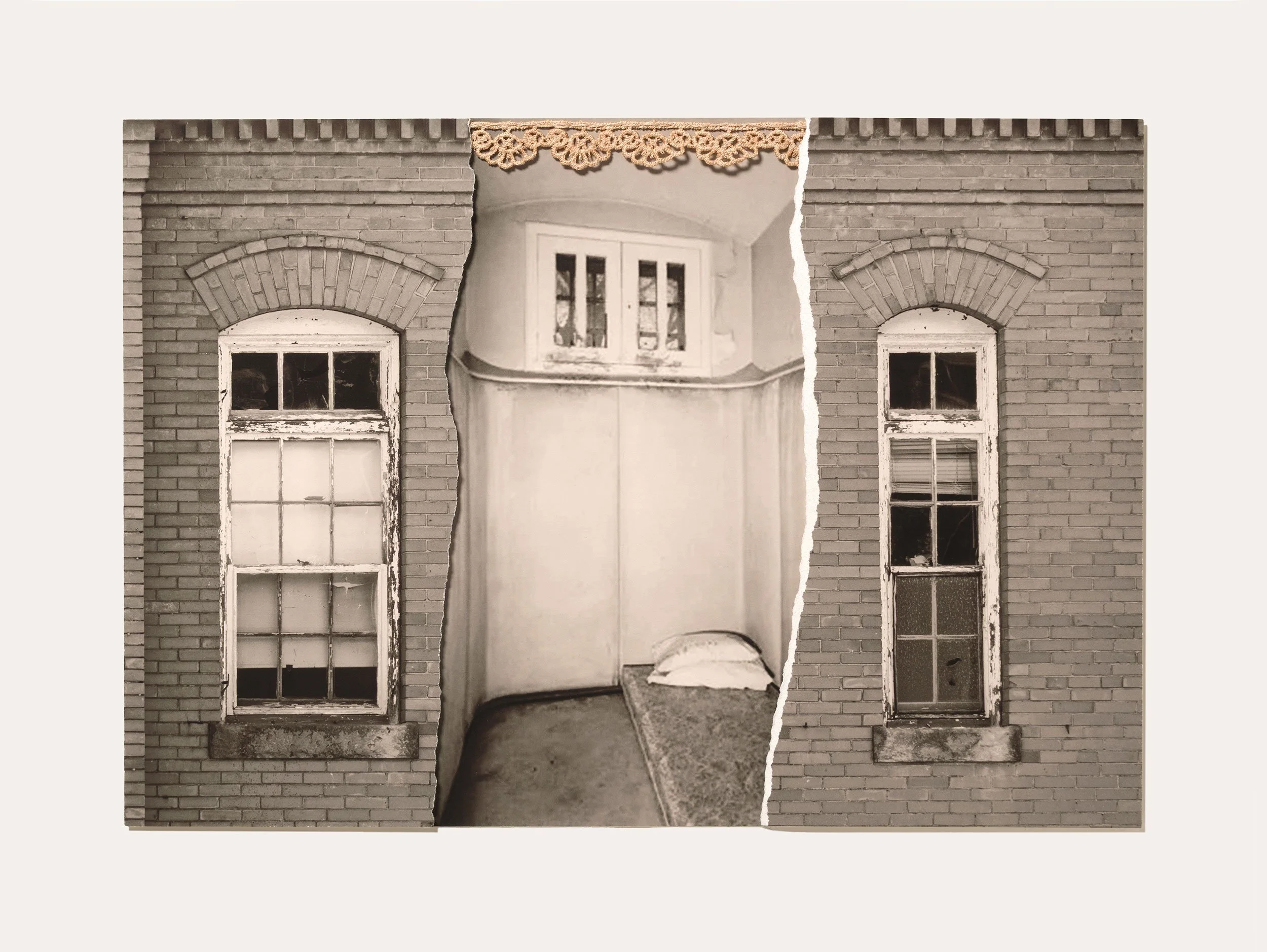
'Two Pillows' - archival pigment prints, tea stained lace/Claybord, 14 x 18 inches
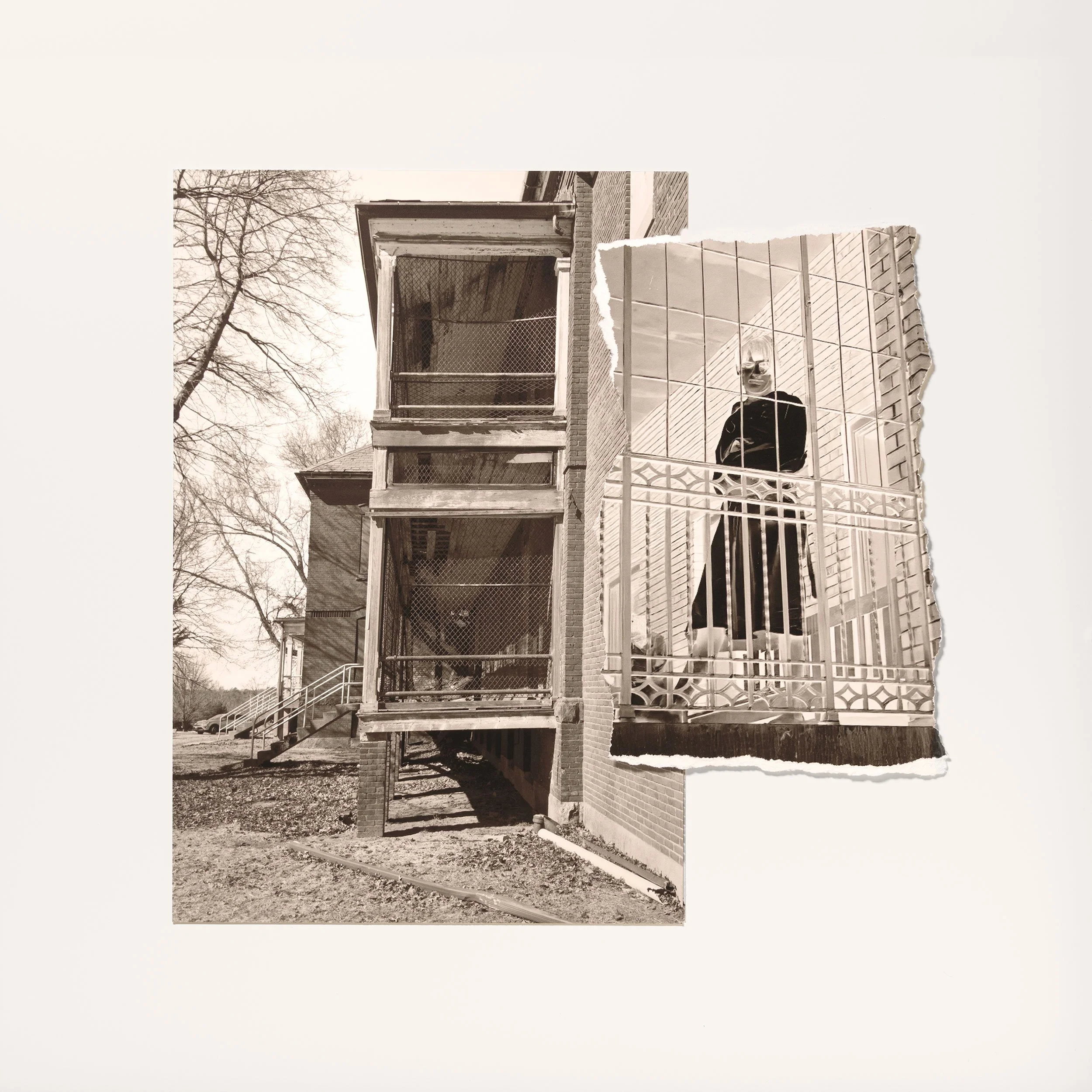
'Fresh Air' - archival pigment prints/Claybord, 16 x 16 inches
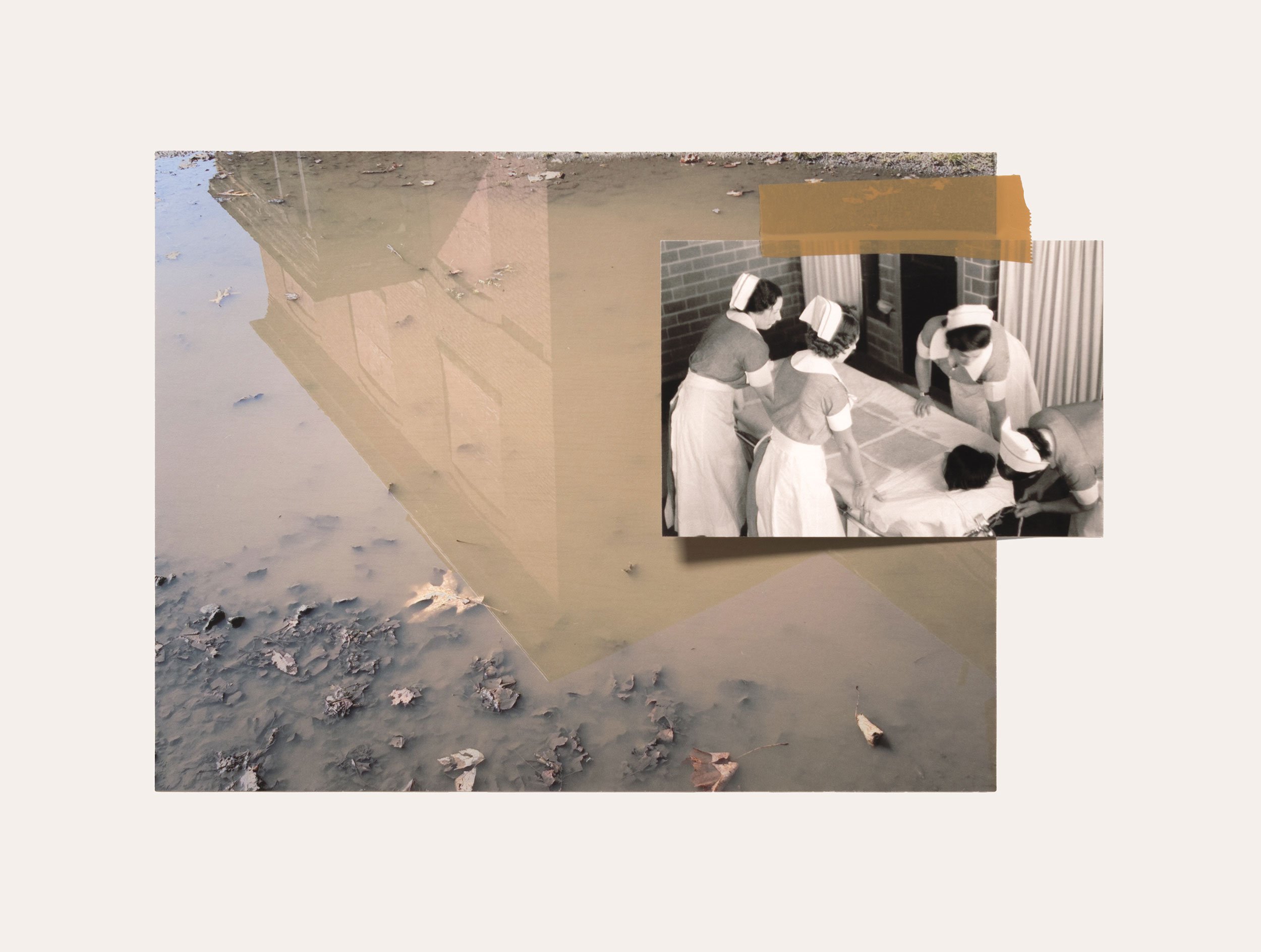
'Cold Bath' - archival pigment prints, plastic tape/Claybord, 12 x 16 inches
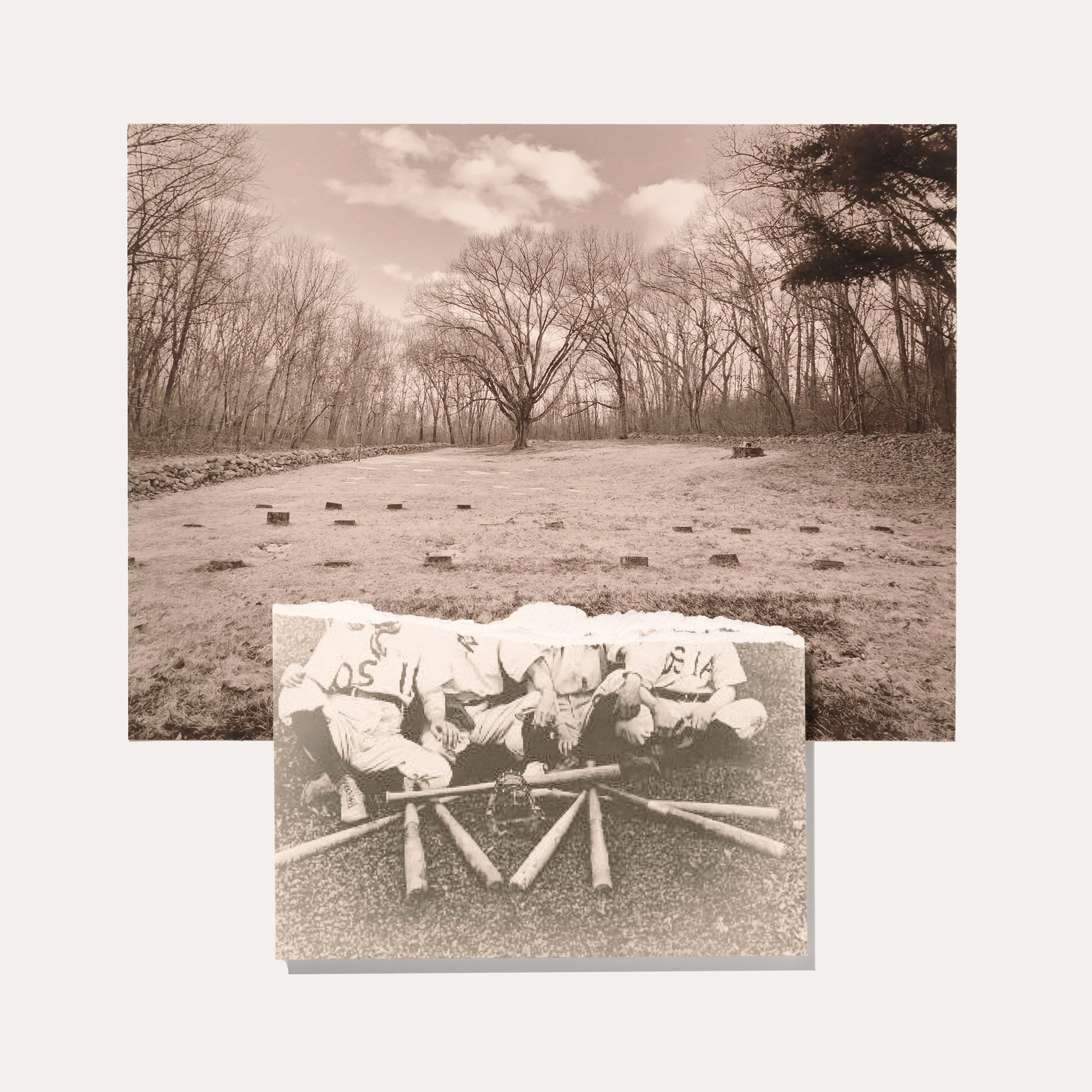
'Stealing from Home' - archival pigment prints/Claybord, 16 x 16 inches
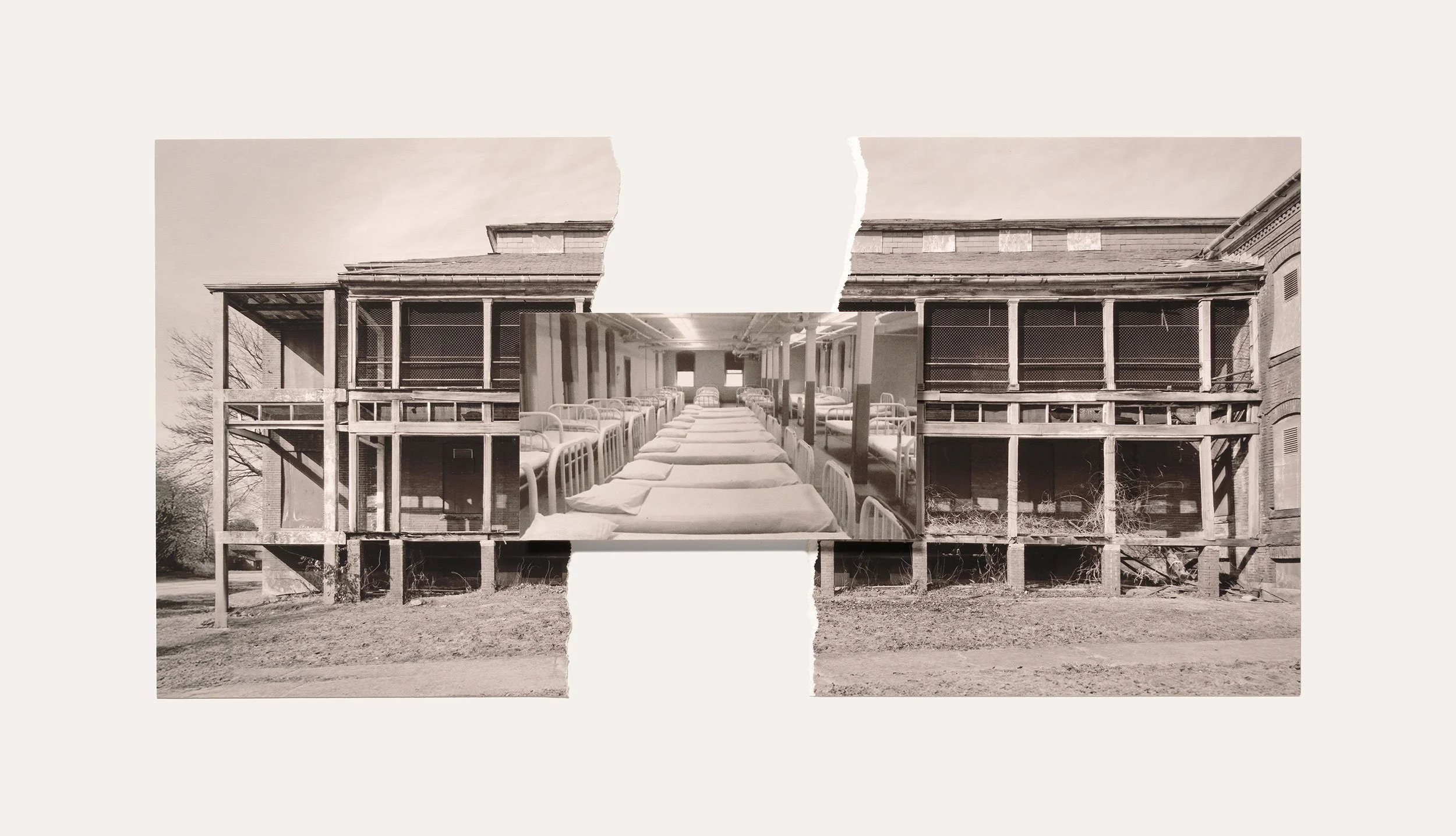
'Bedlam' - archival pigment prints/Claybord, 12 x 20.75 inches
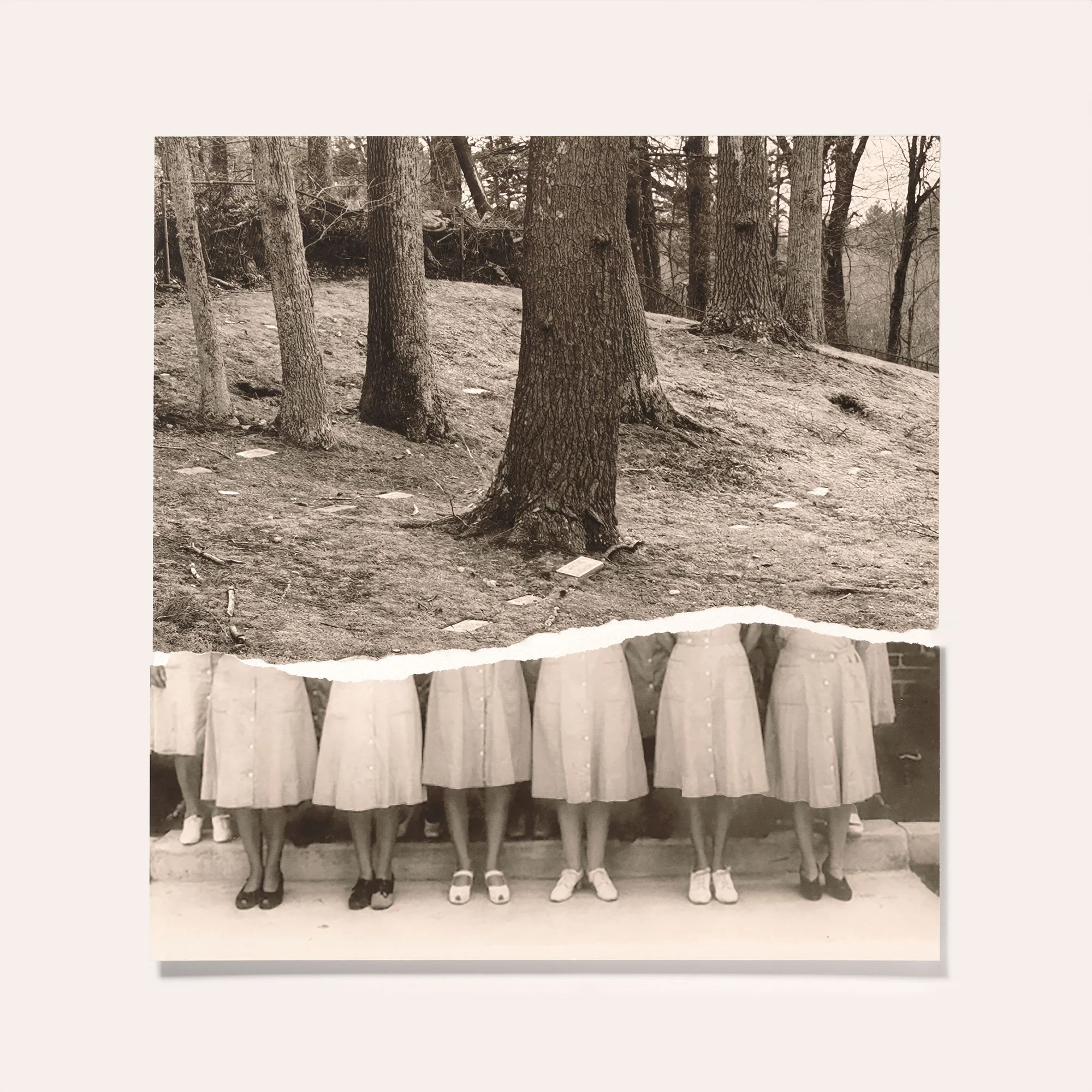
'Burial Ground' - archival pigment prints/panel 18 x 18 x 1 inches
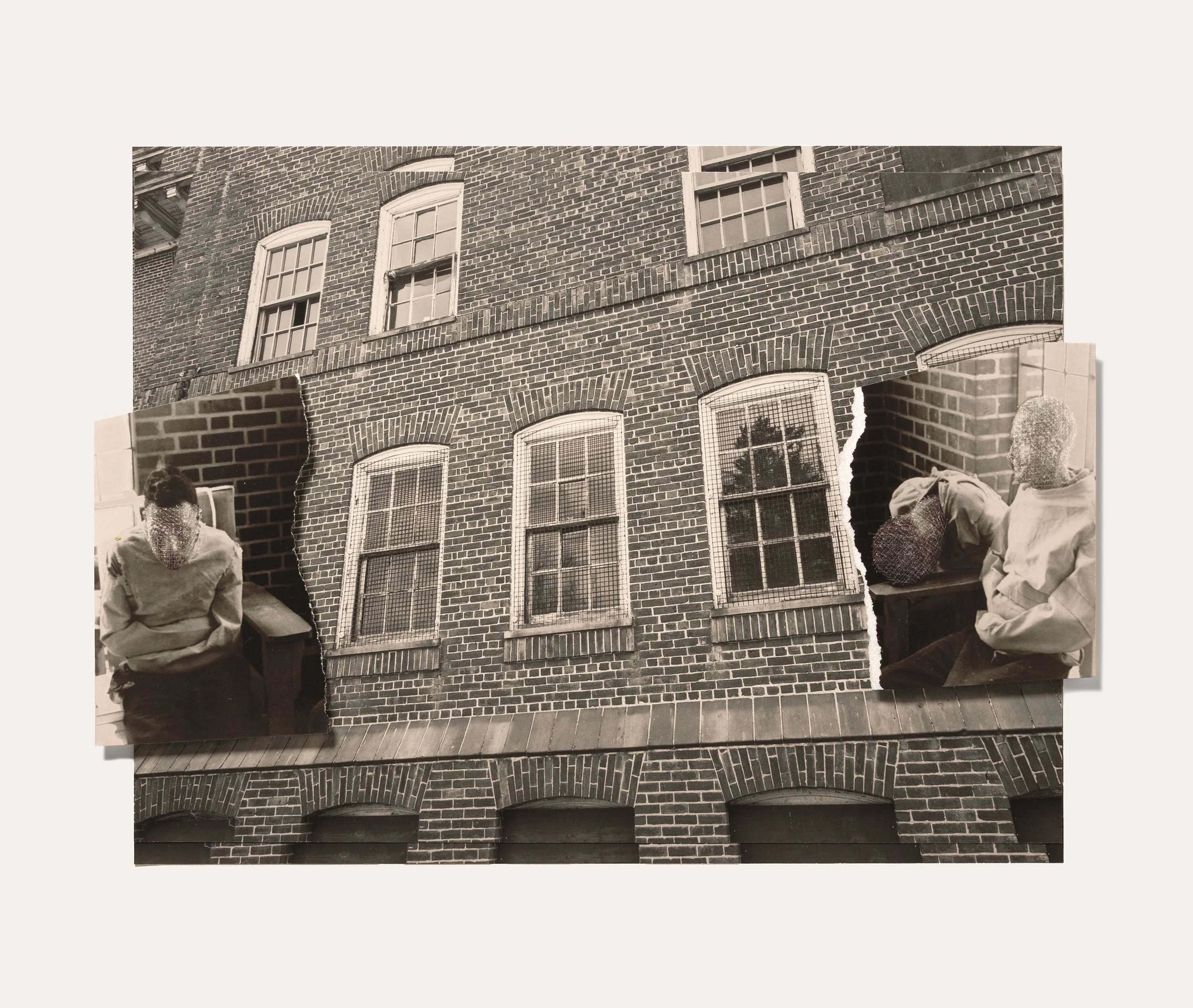
'Double Screened' - archival pigment prints/Claybord, 14 x 18 inches
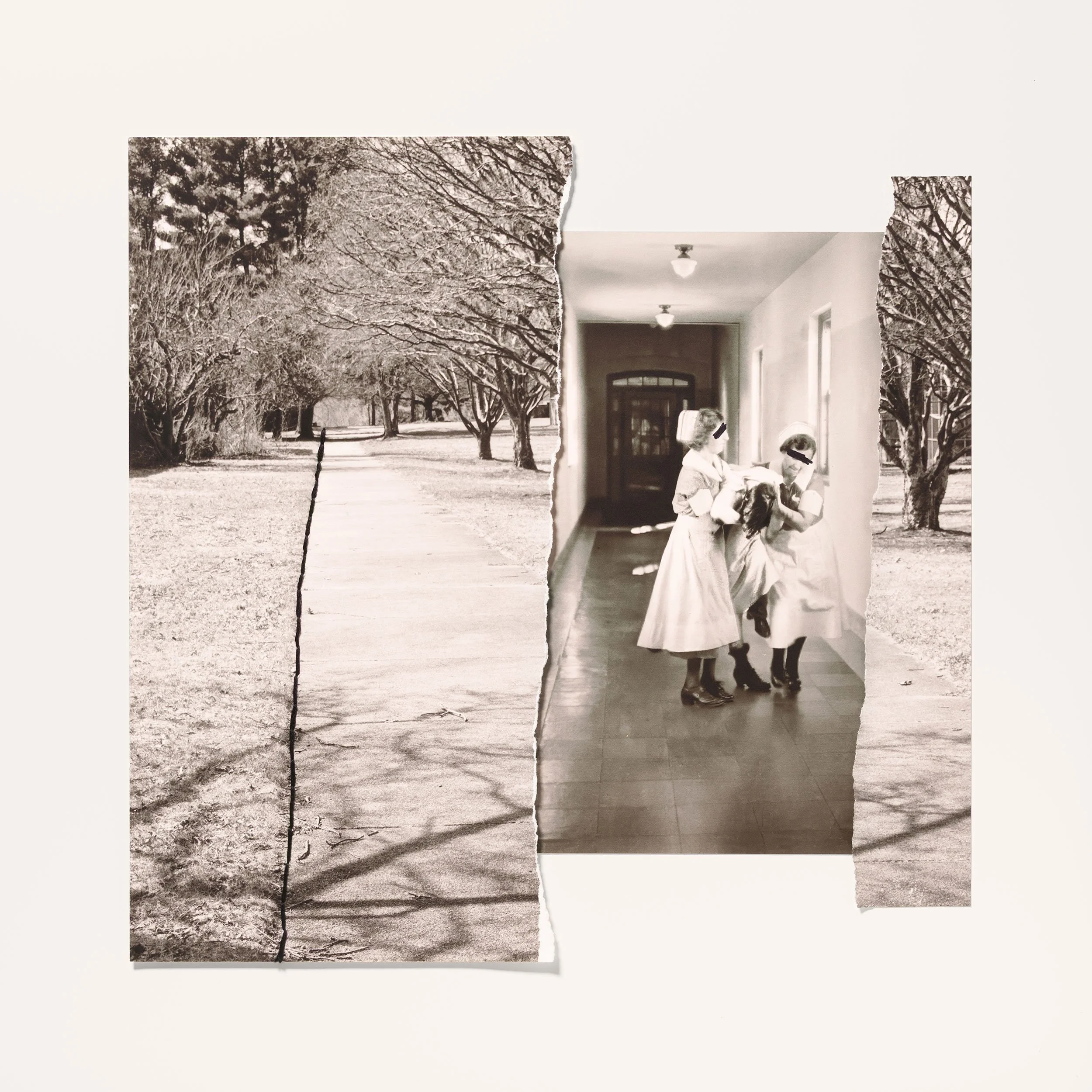
'The Long Haul' - archival pigment prints, cotton thread, 16 x 16 inches
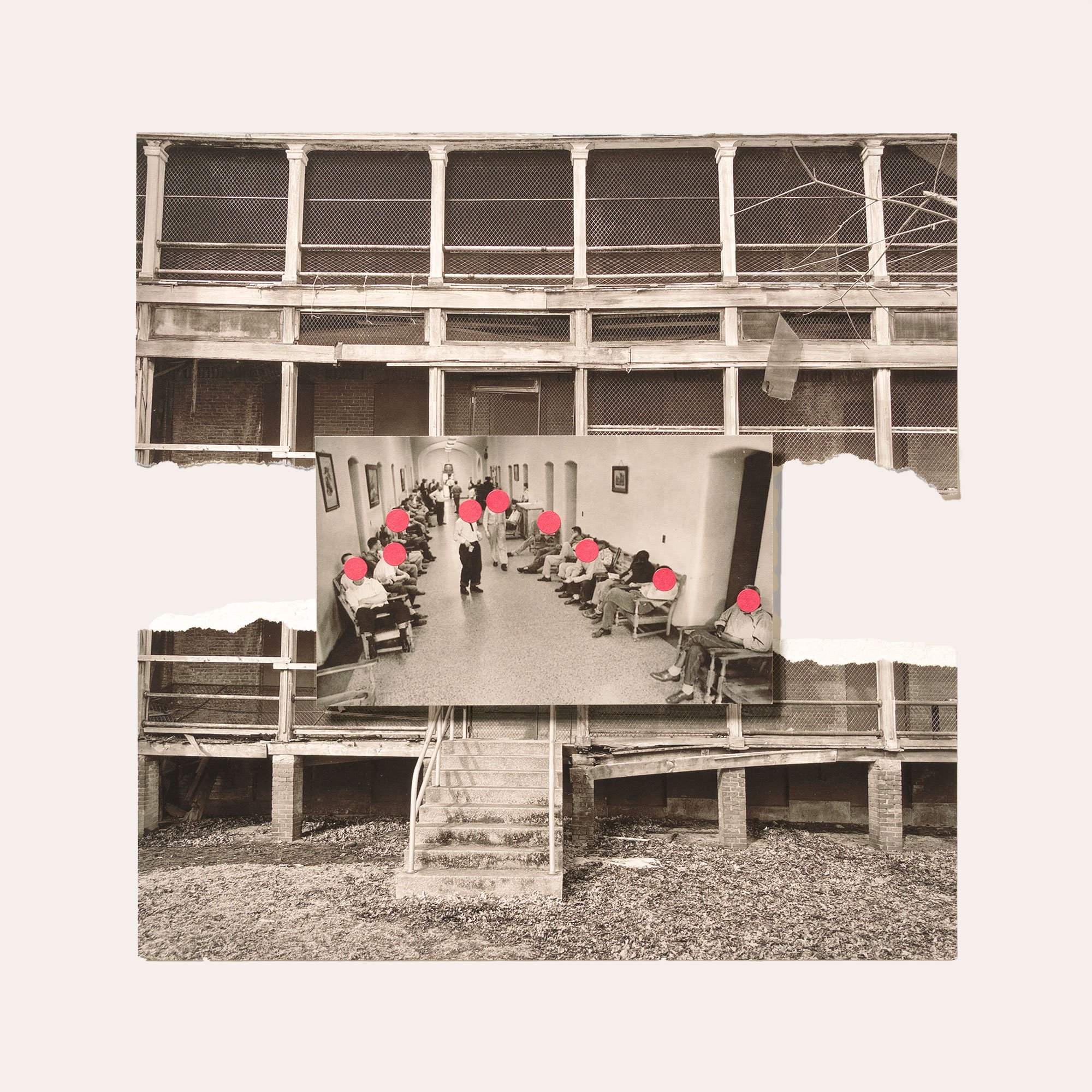
'Men's Room' - archival pigment prints, red dots/Claybord, 12 x 12 inches
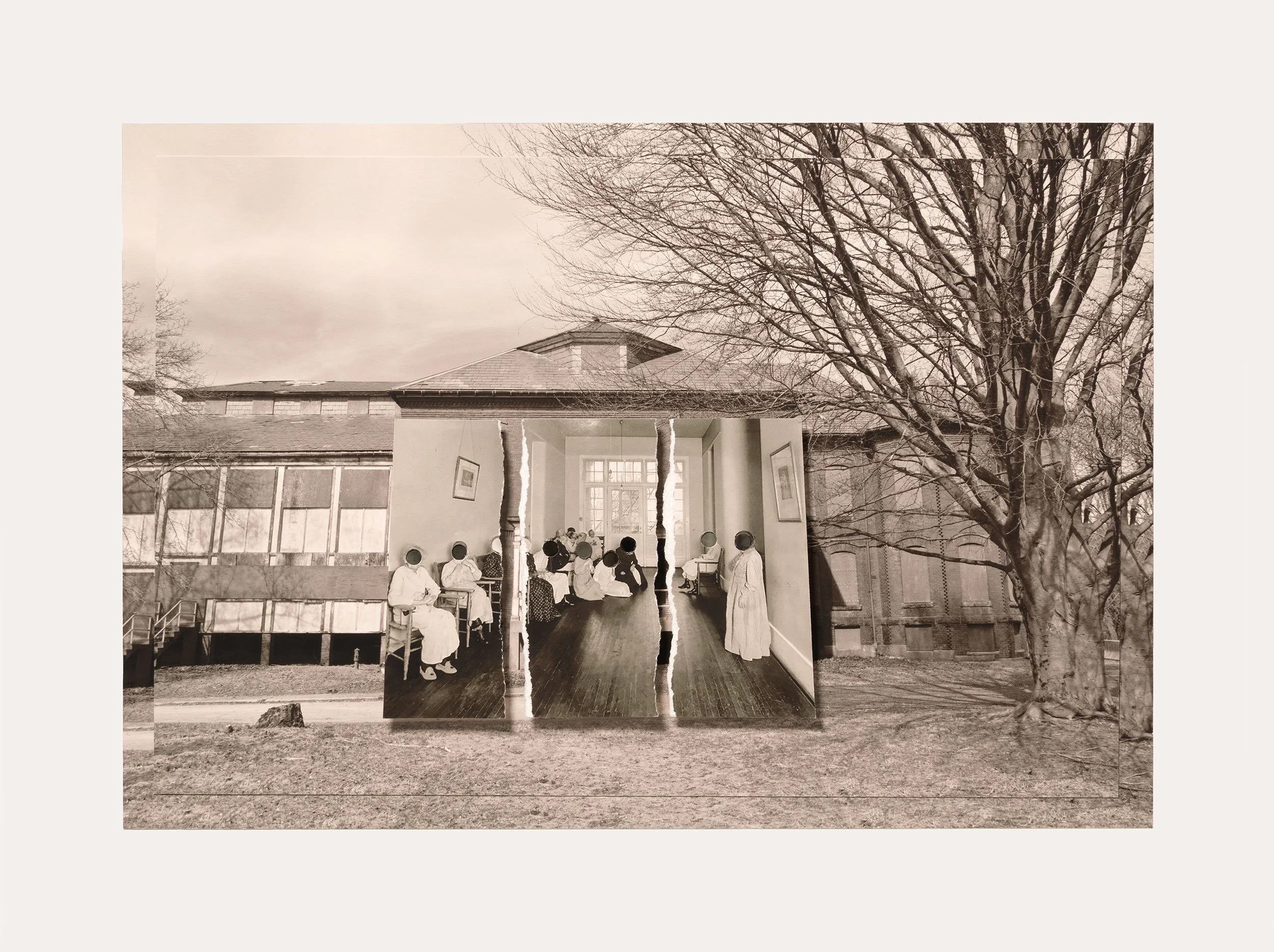
'Ladies in Waiting' - archival pigment prints/Claybord, 14 x 18 inches
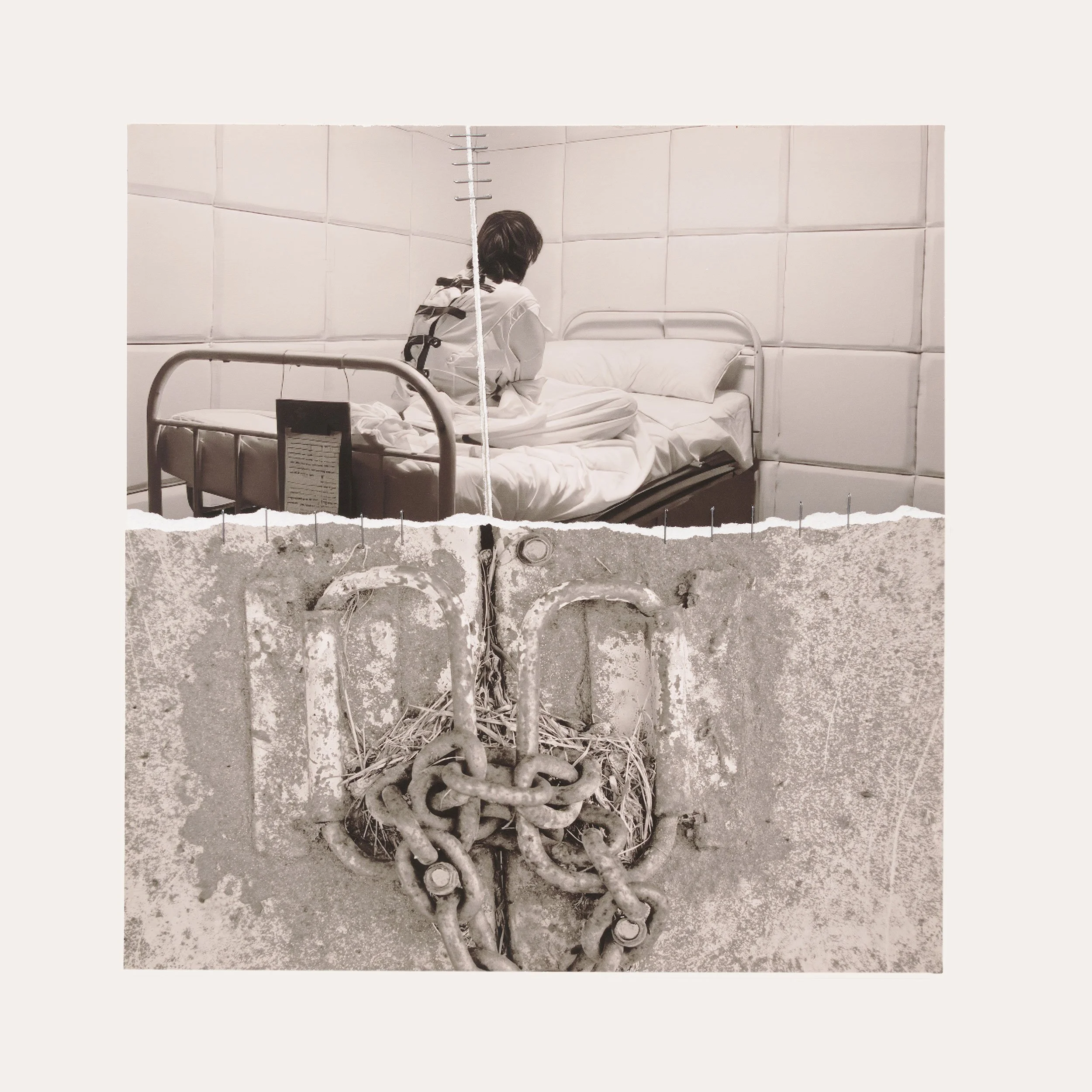
'Wrapped and Tied' - archival pigment prints, staples/Claybord, 16 x 16 inches
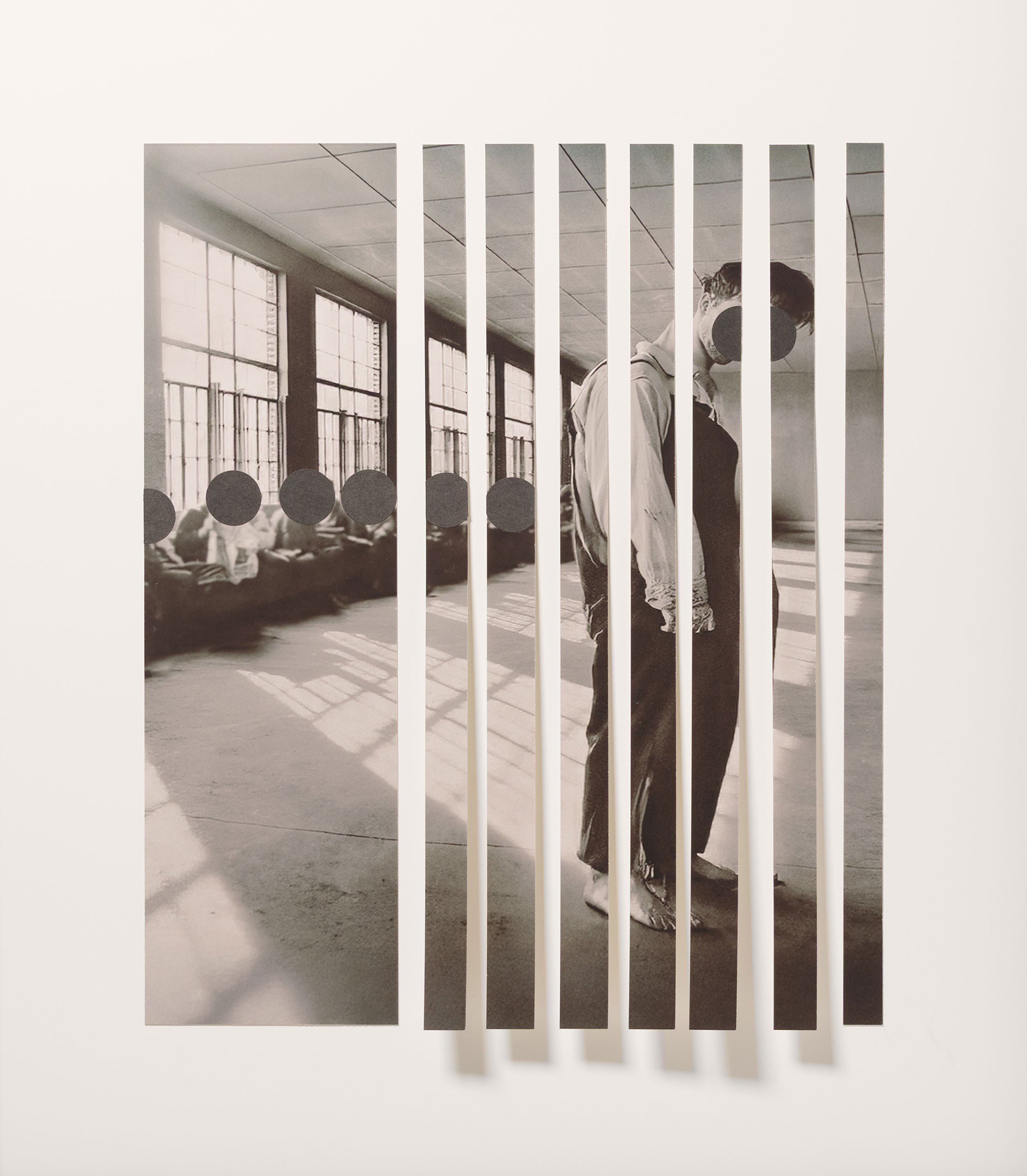
'Divided Man' - archival pigment print/Claybord 16 x 14 inches
Statement
Unearthing an Insane Past
“Insanity is relative. It depends on who has who locked in what cage.” - Ray Bradbury
Today the word asylum refers to a type of protection granted by one country to an individual persecuted by their own country. But an earlier meaning, long outdated, refers to the confinement of men, women and children who were considered mentally ill or “insane.” In this country’s early days mental illness was believed to be caused by moral or spiritual weaknesses. Care for these marginalized people was once handled by their families. As the population increased and with it the rise of mental, behavioral and emotional disorders, institutions were built to care for the substantial needs of such individuals.
My project delves into the traces of trauma of being housed or employed in an insane asylum. This series explores the tragedy of a bygone era of the incarceration of men, woman and children who were deemed outside the norms of the times by society as well as the staff who worked there. Elderly, alcoholics, immigrants who could not speak the language, the handicapped and those who suffered from epilepsy are some illustrations of people being warehoused in these places.
In the United States the emergence of insane asylums began in 1752. Basement rooms, equipped with shackles, in a newly built hospital housed a small number of mentally ill patients. The first freestanding insane asylum was established in 1811 and others soon followed. By the mid 1950s over 550,000 such patients were institutionalized across the country. Large-scale closures of the old asylums began in the 1980s, precipitated by massive budget cuts and the development of psychotropic drugs. Most of those campuses were abandoned and many were finally torn down in the early 2000s for safety concerns. Those demolished places were then redeveloped, and new communities arose, the past erased. One of the few remaining institutions in Massachusetts is a closed state hospital, formerly known as an insane asylum, which is the inspiration for this project.
What was life at insane asylums like in their heyday? One can imagine it was dire for the patients but what about the overworked staff? The work required to care for such patients had to be hard, disquieting and dangerous accompanied by the sense of loss and grief daily. Having grown up in a family of medical professionals I witnessed the challenges of tending to the sick and dying. With this project I seek to unearth some of these stories as a tribute to both the inmates and the medical staff.
I manually merge vintage photographs with my own images of the boarded-up buildings of this hospital. The mixed media incorporates tearing, taping, stitching and other techniques to combine and remix my black and white photographs with ephemera researched from the internet. These deconstructive techniques echo the lives and families torn apart by the incarcerations. I recreate diptychs and triptychs to ponder these subjects and the stories that emerged as I researched the history of insane asylums. My intent is to open a conversation about both the good and bad of the past before it is buried in an unmarked grave.
View handmade photobook of this series.